Flint vs Chert: How to Tell Them Apart in the Field
Two grey stones, picked up a mile apart on the same walk, can behave completely differently under a hammerstone. One peels off long, thin, translucent flakes with a sound like breaking glass. The other crushes, steps, and leaves you with a handful of blunt chips. Telling flint from chert is partly about naming the rock correctly, and partly about answering the only question a knapper really cares about: will this break the way I need it to?
The Same Mineral, Different Homes
Flint and chert are both cryptocrystalline quartz — silicon dioxide in crystals far too small to see — and both usually form within sedimentary rock. The difference lies mainly in the host rock and the shape of the deposit.
Flint is the nodular silica found in chalk, especially the Upper Cretaceous chalk that runs across southern and eastern England. It sits in isolated lumps, often with a lumpy, irregular outline and a rind of white chalky material around it. Chert is the broader term: silica in older limestones, in some sandstones, and frequently in bedded or tabular masses that follow the layers of the rock rather than sitting apart from them.
So flint is a type of chert. In British field usage, though, "flint" has come to mean something quite specific — dark, glassy, chalk-derived, with a pale cortex — while "chert" generally signals paler, duller material from Carboniferous or Jurassic limestone country. Knowing that distinction helps you predict what a stone will do before you strike it.
Colour, Cortex and Surface Texture
Fresh flint is dark: blue-grey, charcoal, near-black, occasionally a deep honey-brown. Its unweathered surface has a waxy, almost oily lustre, and thin edges transmit light with a warm amber glow. The cortex is the giveaway — white, buff or cream, chalky to the touch, sometimes stained orange-brown by iron in the soil.
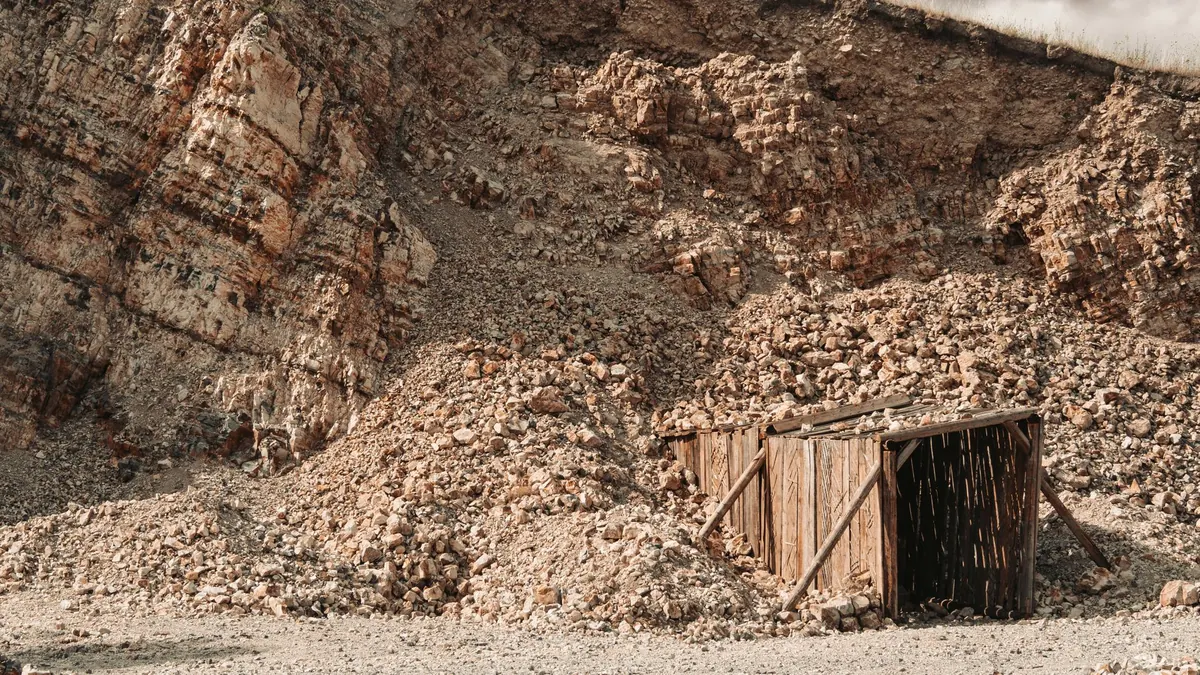
Chert covers a much wider palette. Pale grey, buff, tan, olive, reddish and black all occur, and banding is common where silica has replaced limestone along bedding planes. It usually looks more opaque and more matte than flint, and its weathering rind tends to be a thin brown or grey skin rather than a thick chalky jacket.
Treat colour as a first clue, never a verdict. Some cherts are jet black, and some flints from beach shingle are bleached to a dull grey. Wet the stone with a splash from your bottle — the true surface reads far better damp than dry.
Fracture: What Happens When You Hit It
Both materials break conchoidally, in the curved, shell-like pattern that makes them workable. The quality of that fracture is where the real difference shows.
Good flint breaks smoothly and predictably. The fracture surface is glossy, with fine ripple marks and a slight sheen, and the edges come away thin enough to slice paper. Internal flaws are relatively rare, which is why flint dominates the British archaeological record for fine work such as arrowheads and barbed points.
Chert more often fractures broadly and a little grudgingly. You may get flatter curves, a rougher, slightly granular surface, and a greater tendency to step or crush where the stone meets a fossil, a quartz vein or a bedding line. That said, the best cherts fracture almost as finely as flint — and a frost-shattered, heat-cracked flint will behave worse than any decent chert.
Three things to check on a fresh break
- Lustre: glossy and reflective suggests flint; dull and matte suggests chert.
- Edge quality: a thin, translucent, feathered edge is a good sign in either material.
- Flaws: cracks, fossils, colour changes and gritty inclusions all predict where a flake will fail.
Source and Context
Where you are standing tells you a great deal. If you are on chalk downland, a ploughed field over chalk, or a beach below chalk cliffs, almost everything you pick up will be flint. Move onto older limestone and the picture changes.
- Chalk country — Norfolk, Suffolk, Sussex, Hampshire, Wiltshire, the Yorkshire Wolds, and the beaches below them: flint, often in nodular form.
- Carboniferous limestone — the Peak District, the Mendips, the Yorkshire Dales: chert, frequently in beds and bands.
- Jurassic limestone — the Cotswolds, parts of Dorset and Northamptonshire: chert, sometimes of very good quality.
- Scottish and upland settings — a wide range of siliceous stones, including radiolarian cherts and hornstones, some excellent, some brittle.
Field boundaries help too. Chert often turns up in drystone walls and quarry spoil close to its parent limestone, while flint travels: glacial gravels and river deposits carry it far from any chalk.
Knapping Performance: Which One Comes Home With You
What matters is homogeneity, size and the absence of cracks. A large, clean, unfractured nodule of flint is the easiest material in Britain to learn on: it flakes predictably, takes pressure flaking well, and holds a keen edge.
Chert can be tougher and more abrasive to work, and it sometimes dulls an edge faster in use. But good chert is underrated. Many knappers find certain grey and brown cherts produce sturdier tools for heavier work, and some respond well to gentle heat treatment, which can improve the way they flake. Test a piece before you commit a whole afternoon to it.
Field Tests You Can Run in Two Minutes
- Wet the surface and look at the lustre. Glossy and dark points to flint; dull and pale points to chert.
- Break off a flake with a hammerstone or by tapping two nodules together. The interior is the honest answer.
- Hold a thin edge up to the light. Amber translucency is typical of flint, though plenty of cherts pass this test too.
- Tap the nodule and listen. A clear ring suggests solid stone; a dull thud usually means internal cracks.
- Inspect the cortex. Thick and chalky means chalk-hosted flint; thin and brown usually means limestone chert.
- Tilt the fresh break towards the sun. Ripples and a glassy sheen are good news in either material.
No single test settles it. Two or three agreeing, plus a note of where you found the stone, is enough to make a confident call.
Before You Fill the Rucksack
Do the test break where you find the stone. It saves carrying home a bucket of frost-cracked rubble, and it leaves the good material for someone else. Take only what you will actually work, and check with the landowner first — collecting is restricted on many Sites of Special Scientific Interest, on National Trust land and around scheduled archaeological sites, so ask before you remove anything.
Safety is straightforward but worth repeating. Knapping throws sharp flakes and, when you abrade or grind, fine silica dust that is genuinely bad for the lungs. Work outdoors, wear eye protection and gloves, and use a suitable mask if you are generating dust.
Finally, start a reference collection. A labelled box of pieces from known sites — a chalk-down flint, a Peak District chert, a Cotswold chert — will teach you more in an evening of handling than any description can. Pick them up, snap them, weigh them in your hand. After a season or two, the stone will tell you what it is before you even strike it.
Photo: Michael_Laut / Pixabay
Seasonal Tinder: What to Collect in Each British Month for Flint Sparks
A month-by-month British guide to gathering dry natural tinders — birch bark, thistle down, reed mace and...

How to Run a Beginner-Friendly Flint Knapping Workshop
A practical guide to teaching first-time knappers: session planning, a safety briefing that sticks, tool...
About Us