Flint and Steel in Wet Weather: A Step-by-Step Troubleshooting Guide
Rain changes the rules. Char cloth that caught on the first strike last weekend sits sullen in the tin, tinder that looked dry turns out to be damp through, and the spark that normally drops straight onto your nest is blown sideways before it lands. None of this means flint and steel has stopped working. It means the margins have got thinner, and the order in which you do things now matters more than the tool itself.
Work through the steps below and you will still get a flame on a wet afternoon. Skip them and you will be striking steel at a damp bundle until your fingers stop cooperating.
Understand What the Weather Is Doing
A flint-and-steel spark is a tiny fragment of burning metal. It carries almost no heat and lasts a fraction of a second, so it cannot light a flame directly. Its only job is to land on charred material and leave behind a glowing ember. Everything after that is the ember's work.
Damp weather attacks both halves of that chain. Char cloth absorbs moisture from the air, and damp char either refuses to take the spark or produces an ember that dies within seconds. Wet tinder then conducts heat away from that ember faster than the ember can build it, so a piece of cloth that would normally bring a nest to flame just smoulders and fades.
So there are two jobs: keep the char genuinely dry, and get the ember into tinder that is dry where it matters — at the point of contact, not on the surface.
Protect Your Char Cloth
Char cloth is the weak link, because it is the smallest thing you carry and the easiest to ruin. Treat it like a spare battery.
- Use a tin with a proper seal. A screw-top tobacco tin, a small sweet tin with a tight lid or a film pot all work. A tin that rattles open in your pocket is worse than no tin at all.
- Add a drying sachet. A small silica gel packet in the tin helps, as long as you dry it out at home from time to time on a radiator or in a low oven.
- Carry the tin inside your clothing. An inside chest pocket or a trouser pocket under waterproofs keeps it near body temperature, which is the driest place you have.
- Only open it when you are ready to strike. Take one piece out, close the lid, then work. Do not leave the tin open on the ground while you fiddle with tinder.
- Use the lid as your striking surface. A flat lid, or the upturned base of the tin, gives you a dry place to catch the spark and a ready-made tray for carrying the ember to the nest.
If a piece of char does feel soft and clammy, warm it gently — held in your hand, or a foot or so from a fire you already have — rather than holding it over a flame. Char cloth catches alight very easily, and a piece that flares up is a piece you have lost.
Find Tinder That Is Dry Before You Start
Damp weather tinder is not about finding different materials. It is about finding the dry parts of the same materials, and then processing them somewhere sheltered.
- Dead standing wood. Wood still attached to a standing dead tree holds far less water than anything on the ground. Shave off the wet outer layer with a knife to reach pale, dry shavings underneath.
- Birch bark. The thin papery layers from a dead birch shed water and contain oils. Peel from dead wood, never from a living tree.
- Dead lower branches of conifers. The fine twigs that have died but not dropped are often dry even after days of rain.
- Sheltered grass, bracken and seed heads. Look under dense canopy, under overhanging banks, inside hollows and behind boulders. If it snaps rather than bends, keep it.
- Punk wood and charred materials. Well-rotted, dry punk from a dead stump, or a second piece of char, will take an ember that ordinary tinder rejects.
- Things you carry. Teased jute twine, cotton wool, and dry grass gathered on a previous trip all have their place in a wet-weather pouch.
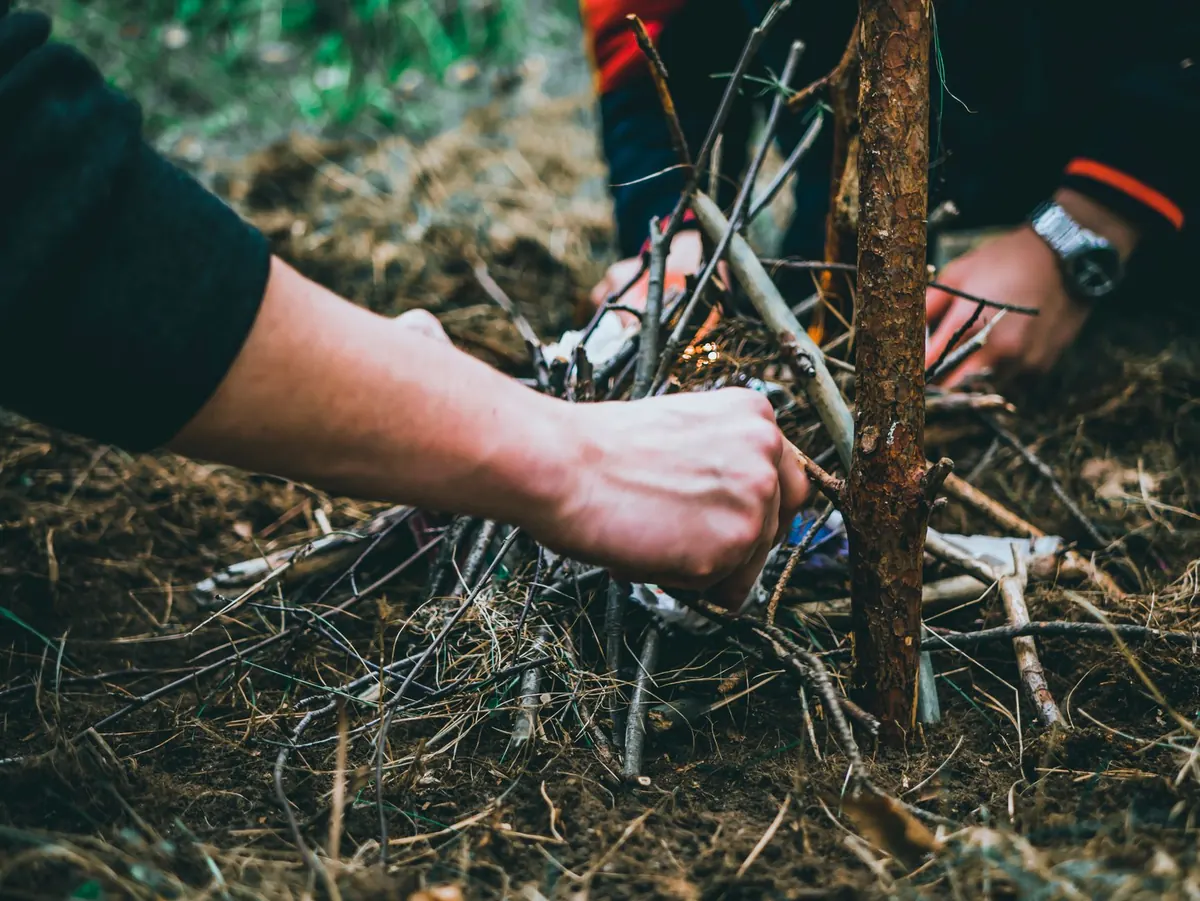
Prepare the nest inside your jacket if you have to, kneeling under a coat or a boulder overhang. A tinder bundle assembled in the open will be damper by the time you finish than it was when you started.
Feather Sticks and Split Wood
Split a thumb-thick stick and you expose a dry core no rain has touched. Carve a handful of feather sticks from that core — thin curls still attached to the parent stick — and you have fuel that will take a flame from a tinder bundle without argument. Do this before you strike, not after.
Shield the Spark
Most wet-weather failures are not damp materials at all. They are sparks landing a centimetre to the left of the char cloth.
Get low. Crouch or kneel with your back to the weather, and use a tree trunk, a boulder or a bank to break the wind. If rain is driving, open your coat and work underneath it, accepting that you will get wet rather than the tinder. Keep your hands dry — wet, cold fingers fumble the steel, and a damp thumb pressed on char cloth can kill the ember before it forms.
Strike downward and slightly towards yourself so that sparks fall onto the char rather than past it. Hold the char on a dry surface: the tin lid, a flat stone, a piece of bark or a leather glove. When the ember catches, do not rush. Give it a few seconds to spread through the cloth, then pinch it between finger and thumb and place it into the heart of the nest.
Build the Fire Off the Ground
Wet soil will pull heat out of your fire all night. Get it up.
- Clear the ground and lay a platform — green logs, flat stones, or a sheet of dry bark.
- Place the tinder bundle on the platform, with the ember tucked inside it, and blow steadily from below rather than above.
- Add pencil-thin twigs, then thumb-thick sticks, then split pieces with the dry core facing the flames.
- Feed it gradually. A wet fire smothered with too much fuel too soon is harder to rescue than one that is coaxed.
- Keep a reserve of dry fuel under cover — inside your jacket, in a bag, under a spruce canopy — so the next ten minutes are not spent hunting wet sticks.
Collect twice as much fuel as you think you need. In rain, a fire burns faster and your hands get clumsier as you go.
When It Simply Will Not Go
There is no shame in a fallback. Carry a second, sealed char kit and a ferrocerium rod or storm matches, and use them if the light is going and you are getting cold. Pride is a poor way to spend the night.
Before you light anything, check whether open fires are permitted where you are, and get the landowner's permission where it is needed. If someone in the group is genuinely cold and wet, shelter and dry clothing matter far more than any technique on this page — get them out of the wind, and seek proper help if they are not warming up.
Practise in the Rain on Purpose
The best time to learn this is a wet Sunday in your own garden, with a hot drink waiting inside. Take your tin out, kneel on the wet grass, and work through the sequence: dry hands, char in the lid, spark onto the char, ember into a nest you prepared beforehand. You do not need to finish with a fire. Getting a spark to hold as a glowing ember in the rain is the skill that everything else depends on.
Do that half a dozen times and the wet-weather routine becomes automatic: tin from the inside pocket, tinder processed under shelter, body between the wind and the char, fire lifted off the ground. Then a rainy day stops being a reason to leave the flint and steel at home.
Photo: Mike / Pexels
Seasonal Tinder: What to Collect in Each British Month for Flint Sparks
A month-by-month British guide to gathering dry natural tinders — birch bark, thistle down, reed mace and...
Flint vs Chert: How to Tell Them Apart in the Field
Flint is a kind of chert, but the two behave differently under a hammerstone. Here's how to read colour,...
About Us